Today, we’re releasing Scanify — a command-line tool for Mac that transforms PDF documents to look like they were scanned.



Today, we’re releasing Scanify — a command-line tool for Mac that transforms PDF documents to look like they were scanned.

I recently faced a common yet complex challenge: merging two separate Git repositories — a Rails backend and a React frontend — into a unified monorepo. What made this particularly challenging was the scale: each repository had approximately 100 branches, representing years of parallel development work.

The modern software landscape is often painted with the promise of microservices: small, independent, and highly scalable. Yet, for countless organizations, the implementation has been anything but smooth, morphing the dream into what many frustrated business owners might call Microshitvices. A flurry of independent services, each with its own data store and deployment pipeline, was supposed to unlock unprecedented agility. Instead, for many, it’s become a complex, slow, and expensive entanglement.

Rails 8 comes with a new feature that makes monitoring your application’s health much easier: a built-in health check endpoint. This simple yet powerful addition helps developers ensure their applications are running smoothly without requiring custom code.

When working with large hashes or arrays in RSpec, you’ve likely encountered truncated output that makes debugging difficult. Let’s examine this common problem and its simple solution.
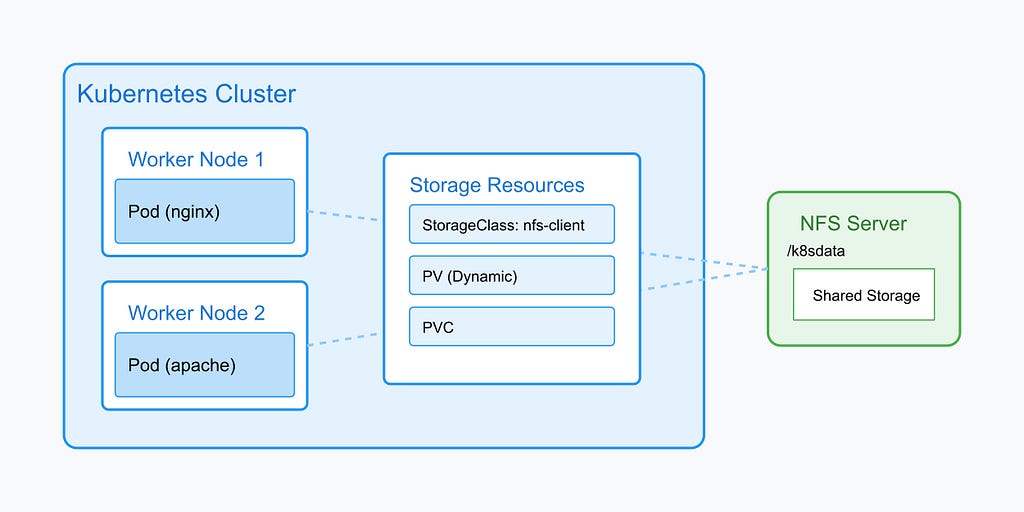
In Kubernetes environments, managing persistent storage is crucial for stateful applications. Network File System (NFS) provides a reliable and straightforward solution for implementing shared storage across your Kubernetes cluster. This guide will walk you through setting up an NFS server and configuring it with Kubernetes using the NFS Subdir External Provisioner.

In the world of modern software development, we are often sold on the idea that complex CI/CD pipelines, Kubernetes clusters, and fully automated deployment workflows are the pinnacle of efficiency. On paper, it sounds great — every change goes through rigorous automated testing, containerized builds, and orchestrated rollouts via EKS, ECS, or similar systems.

When building robust applications, it’s crucial to have visibility into the health of all your external services. I always advocate for implementing a comprehensive vitals checking system in every project. Today, let’s focus on how to implement health checks for Amazon Timestream in a Rails application.

EventMachine is a popular Ruby gem that provides event-driven I/O using the Reactor pattern. While it’s typically installed via a simple gem install eventmachine, Apple Silicon (M1/M2) Mac users often encounter compilation issues when installing from source. This guide walks through the common problems and provides a detailed solution.

In the rapidly evolving landscape of technology, the rise of artificial intelligence (AI) has left no industry untouched. One of the latest casualties of this revolution is Stack Overflow, the beloved question-and-answer platform that has long been a go-to resource for developers worldwide. As the era of AI-powered chatbots and similar technologies dawns, Stack Overflow finds itself struggling to adapt, resulting in a significant decline in traffic, layoffs, and an uncertain future.
Netdata is a powerful monitoring and troubleshooting tool. It consists of two main components: the Netdata agent and the Netdata Cloud.
In this article, let's see how to quickly set up an NGINX container with a self-signed certificate using Docker without having to manually construct or modify a single thing!